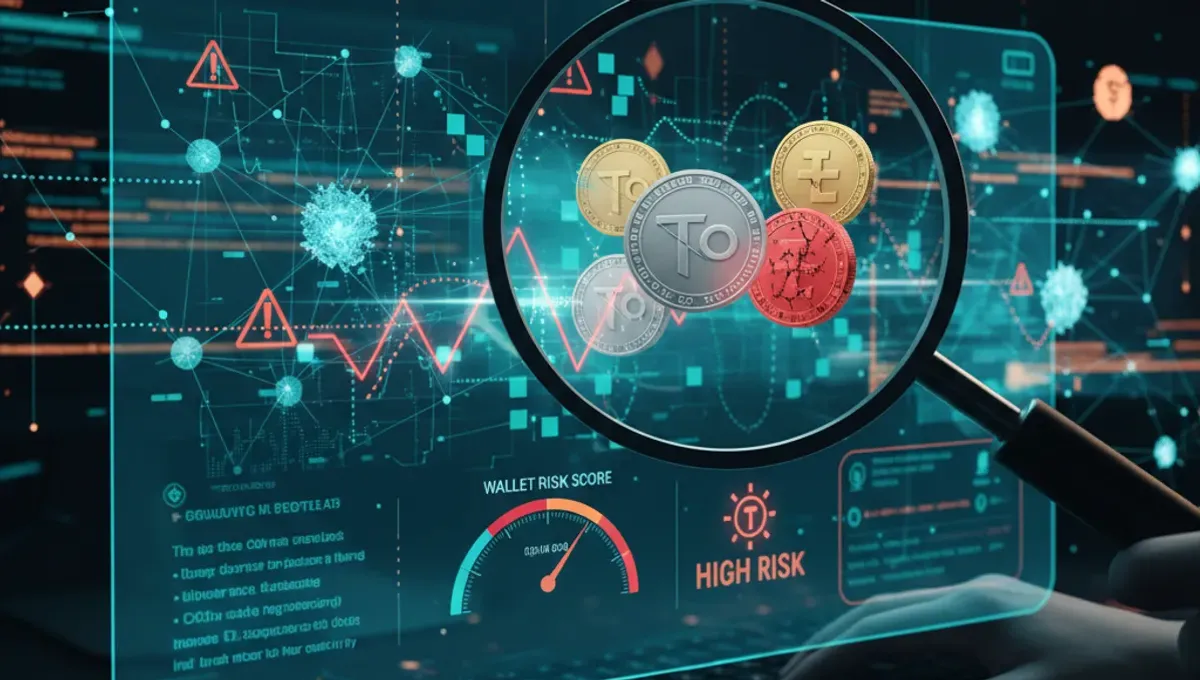
What Is an AML Crypto Check and Why It Matters
An AML crypto check screens a wallet address against compliance databases to identify risk factors. These checks examine transaction history, linked entities, and behavioral patterns to flag exposure to mixers, darknet markets, scams, stolen funds, and sanctioned entities. Financial institutions and exchanges use AML checks to meet regulatory requirements and prevent money laundering. For individual users, an AML crypto check protects you from receiving tainted coins that could trigger account freezes or withdrawal blocks. If you receive USDT on Tron (TRC20) or Bitcoin from a flagged address, your exchange account may be locked pending review, even if you were unaware of the coin's origin. A simple wallet screening before accepting large transfers can prevent compliance headaches and lost access to your funds.
How AML Risk Scores and Wallet Screening Work
AML risk scoring assigns a numerical rating to a wallet based on its transaction history and associations. Most systems use a scale from 0 (low risk) to 100 (high risk), though some use percentage or tier-based ratings. A wallet receives a higher risk score if it has interacted with known mixers, received funds from theft or ransomware, or been flagged by sanctions authorities. Wallet screening tools analyze on-chain data—transaction patterns, time of movement, destination addresses, and cluster analysis—to build a risk profile. For example, a wallet that frequently sends small amounts to many different addresses in short timeframes may indicate mixing behavior. Conversely, a wallet with steady, transparent transaction history and no darknet exposure typically scores low. Risk scores are not permanent; they reflect the wallet's current and historical activity. Understanding these scores helps you set acceptable thresholds for your business or personal use.
How to Check a Crypto Wallet Before Receiving USDT or TRX
Follow these steps to perform an AML crypto check on an address:
- Collect the wallet address you want to screen (e.g., a TRX address on Tron, a USDT contract address, or a Bitcoin address).
- Visit a trusted AML check service—our curated list of verified AML services includes tools that support multiple blockchains and provide detailed risk reports.
- Paste the address into the search field and initiate the scan.
- Review the risk score and detailed findings, which typically include transaction volume, linked entities, and any flagged activity.
- Check for specific risk categories: mixer exposure, darknet market connections, stolen funds, sanctions matches, and gambling platform links.
- Decide whether the risk level is acceptable for your use case. For high-value transfers or regulated businesses, even a medium-risk score may warrant further investigation.
- Document the check result for compliance records if required by your jurisdiction.
Free AML crypto check tools often provide basic screening, but may have limits on the number of daily checks or depth of reporting. Paid services typically offer faster results, historical data, and API access for automated wallet monitoring.
Understanding AML Risk Score Levels and What They Mean
Risk score interpretation varies by service, but general guidelines apply:
- Low Risk (0–20): Minimal exposure to illicit activity. Safe for most transactions.
- Medium Risk (21–50): Some exposure to high-risk entities or mixing services, but not conclusive evidence of wrongdoing. Requires manual review for regulated use.
- High Risk (51–80): Significant connections to darknet markets, theft, ransomware, or sanctions. Avoid unless you can verify legitimacy through independent means.
- Critical Risk (81–100): Strong indicators of illicit origin, active sanctions match, or direct darknet involvement. Do not accept without legal guidance.
For businesses, acceptable thresholds depend on regulatory requirements and risk appetite. A cryptocurrency exchange may reject any address above 30, while a peer-to-peer trader might accept up to 50 if they trust the sender. Always document your risk tolerance policy and the rationale for accepting or rejecting a transaction. If a wallet scores high but the sender claims legitimacy, request additional proof of funds origin before proceeding.
What Happens If Your Coins Are Flagged as Tainted or Dirty
If you receive coins flagged as tainted—meaning they have exposure to theft, ransomware, or sanctions—several outcomes are possible. Exchanges may freeze your account pending investigation, especially if the transfer is large or the source is clearly linked to illicit activity. This freeze can last days or weeks while compliance teams review the transaction. In some cases, exchanges may require you to prove the source of funds or may permanently close your account if they cannot verify legitimacy. You will not lose the coins themselves, but access to them may be restricted. To minimize this risk, screen incoming transfers before accepting them. If you do receive flagged coins, contact your exchange's compliance team immediately with documentation of the transaction and your due diligence. Explain that you were unaware of the coin's history and provide any evidence that you are a legitimate user. Proactive communication often results in faster account reinstatement than silence.
Common Risk Categories in Crypto AML Checks
AML checks flag several specific risk categories:
- Mixers and Tumblers: Services that obscure transaction trails. Interaction with mixers raises compliance concerns even if the user's intent was privacy rather than concealment.
- Darknet Markets: Wallets linked to known darknet marketplaces for illegal goods. These carry the highest risk.
- Stolen Funds: Coins traced to theft, hacking, or fraud. Receiving stolen funds can result in legal liability and account freezes.
- Ransomware Payments: Wallets that received ransom payments. These are often flagged by law enforcement and sanctions bodies.
- Sanctioned Entities: Addresses linked to individuals or organizations on OFAC, EU, or other sanctions lists. Transacting with sanctioned entities violates law in many jurisdictions.
- Gambling Platforms: Some compliance frameworks flag gambling-related addresses as higher risk due to money laundering concerns.
- Scam Proceeds: Wallets associated with Ponzi schemes, rug pulls, or fraud.
Not all flagged activity is illegal, but it warrants investigation before accepting large transfers.
Best Practices for Avoiding Tainted Coins and Frozen Accounts
To protect yourself from compliance issues:
- Screen all incoming transfers above a threshold you set (e.g., $1,000 or higher).
- Use an AML crypto check service before accepting deposits from unfamiliar senders.
- Maintain records of all screening results for audit purposes.
- Set a risk tolerance policy and apply it consistently. For example, reject any address scoring above 40.
- Verify sender identity through independent channels if the risk score is elevated.
- Use reputable exchanges and wallets that perform their own AML screening.
- Avoid peer-to-peer trades with unknown parties unless you can verify their wallet history.
- If you operate a business, implement transaction monitoring to catch flagged activity early.
- Keep your own wallet secure to prevent theft, which would flag your address as a source of stolen funds.
- Educate yourself on your jurisdiction's AML and KYC requirements; compliance standards vary by country.
Regular wallet screening is the simplest way to stay compliant and avoid the disruption of frozen accounts.
Frequently asked questions
Is there a free AML crypto check tool I can use?
Yes, several services offer free AML crypto checks with basic screening. Free tools typically allow a limited number of daily checks and provide essential risk data. For frequent use or detailed reporting, paid services are more practical. Check our curated list of verified AML services to find options that fit your needs and budget.
Can I check a crypto wallet on Telegram for AML risk?
Some AML services offer Telegram bots for quick wallet screening, but verification is limited. For thorough AML crypto checks, use a dedicated web platform or API. Telegram bots are convenient for quick lookups but may not provide full transaction history or detailed risk analysis.
What does a high AML risk score mean for my USDT or TRX address?
A high AML risk score indicates exposure to illicit activity, mixers, darknet markets, or sanctions. It does not prove guilt, but it signals that the address warrants caution. Exchanges may freeze accounts or require additional verification. Always investigate the source before accepting high-risk transfers.
How long does an AML crypto check take?
Most AML checks complete in seconds to a few minutes. Free services may be slower due to server load. Paid services typically prioritize speed and return results within seconds. Real-time screening is important for time-sensitive transactions.
Will an AML check on my wallet flag me as suspicious?
No. Performing an AML check on your own wallet does not flag you or trigger compliance alerts. It is a standard due diligence practice. Exchanges and compliance teams only investigate if they receive flagged transfers or detect suspicious patterns in your account activity.