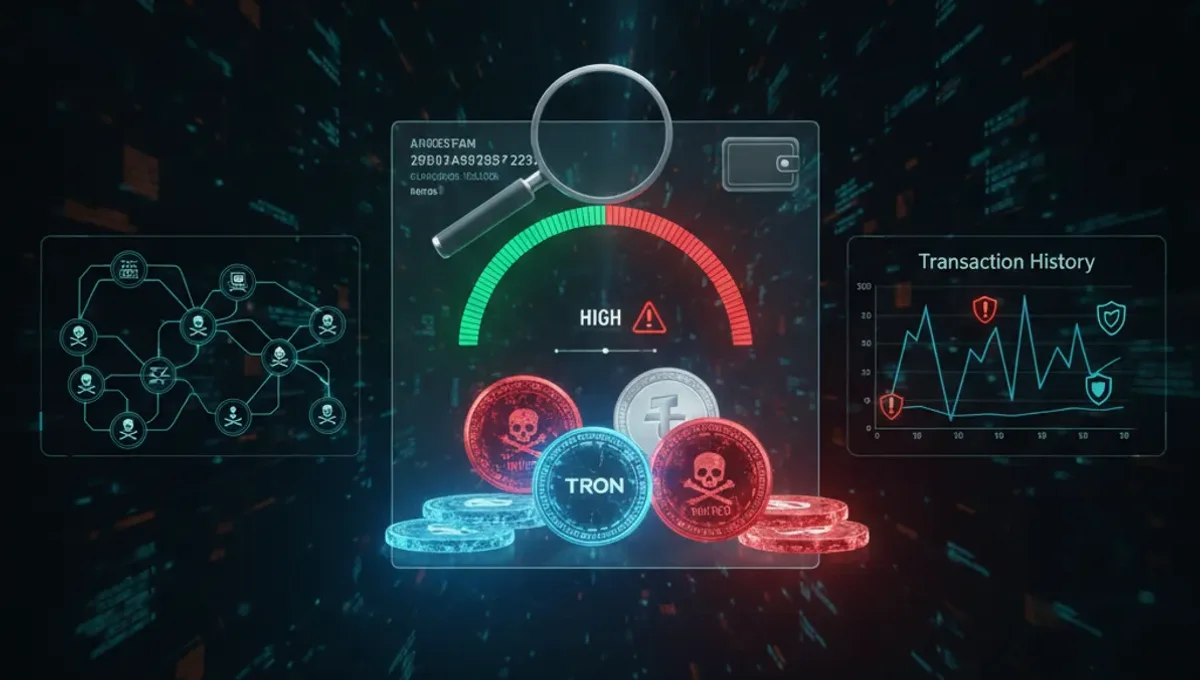
What Is an AML Crypto Wallet Check?
An AML crypto wallet check is a blockchain analytics scan that flags whether a wallet address has received or sent funds tied to high-risk sources. The check examines transaction history against known risk categories: mixers, darknet markets, scams, stolen funds, sanctioned entities, and gambling platforms. When you perform an AML crypto check, the service returns a risk score and a detailed report showing which transactions triggered alerts. This differs from a simple balance lookup—it's a compliance assessment. Most institutional exchanges, custodians, and compliance teams now require wallet checks before accepting deposits. For individual users and small businesses, a free AML crypto check can reveal whether incoming USDT or TRX carries compliance risk before you accept it.
How Does AML Wallet Screening Work?
Wallet screening uses blockchain data and threat intelligence to trace fund origins. When you submit a wallet address for an AML check crypto wallet assessment, the service queries the blockchain ledger to map all inbound and outbound transactions. It then cross-references those transactions against known risk databases: sanctions lists (OFAC, EU, UN), darknet market addresses, mixer services, and fraud reports. The system assigns a risk score based on the number and severity of flagged transactions in the wallet's history. A wallet that received funds directly from a known mixer or sanctioned entity will score higher than one with clean transaction history. The entire process typically takes seconds to minutes. Most services also flag the wallet's age, transaction frequency, and whether it has interacted with known high-risk protocols or exchanges.
Step-by-Step: How to Check a Wallet Before Receiving USDT or TRX
Follow these steps to perform an AML crypto wallet check before accepting a deposit:
- Obtain the wallet address from the sender. Confirm it matches the intended recipient (copy-paste to avoid typos).
- Choose a wallet screening service. Visit the curated list of verified AML services on this site to find trusted options that support your blockchain (Tron, Bitcoin, Ethereum, etc.).
- Enter the address into the screening tool. Most services accept wallet addresses directly without requiring login.
- Review the risk score. Scores typically range from low (green) to high (red). Understand what each level means for your use case.
- Examine the detailed report. Look for specific flagged transactions, risk categories, and dates of suspicious activity.
- Make a decision. Accept the transfer if the risk is acceptable, or request a different address from the sender.
- Document the check. Keep records of the wallet address, risk score, and timestamp for compliance and audit purposes.
For USDT TRC20 and Tron addresses, ensure the screening service explicitly supports TRC20 tokens, as some tools only cover Bitcoin or Ethereum.
Understanding Risk Scores and Acceptable Thresholds
AML wallet risk scores typically use a scale from 0 to 100 or a color-coded system (green, yellow, red). A score of 0–20 indicates low risk: the wallet has minimal or no flagged transactions. A score of 20–50 indicates medium risk: the wallet may have received funds from mixers or lower-tier risk sources, but no direct sanctions or major fraud links. A score of 50–100 indicates high risk: the wallet has clear ties to darknet markets, stolen funds, sanctioned entities, or major scams. Acceptable thresholds depend on your compliance posture. Regulated exchanges typically reject wallets scoring above 50. Smaller businesses or individuals may accept medium-risk wallets if they understand the implications. If a wallet scores high, the sender may be unaware their address is flagged—ask them to use a different wallet or investigate the flagged transactions. Never accept a wallet flagged for sanctions violations or known stolen funds, as this exposes you to legal and regulatory risk.
What to Do If Your Wallet Is Flagged as Dirty Crypto
If you receive a wallet screening report showing your address flagged for tainted coins or high risk, take these steps:
- Review the flagged transactions. Check the detailed report to identify which specific transactions triggered the alert. Many flags are false positives or outdated.
- Trace the source. If a transaction is flagged, research whether the sending wallet was compromised, involved in a known scam, or legitimately associated with a service that uses mixers.
- Contact the flagging service. Some AML providers allow you to dispute inaccurate flags or provide context for legitimate transactions.
- Move funds to a clean wallet. If you control the flagged wallet, transfer your coins to a new address with no prior transaction history. This creates a clean on-chain record going forward.
- Inform exchanges. If you plan to deposit flagged coins on an exchange, notify their compliance team beforehand with documentation of the transaction source and your dispute.
- Avoid mixers and high-risk services. Do not attempt to obscure the transaction history by using mixers or tumblers—this increases regulatory scrutiny and may violate AML/KYC rules in your jurisdiction.
Flagged wallets can still be used, but you may face delays or account restrictions on regulated platforms.
Why Exchanges Freeze USDT and Crypto Accounts
Exchanges freeze accounts and freeze USDT deposits when they detect high-risk wallet activity during deposit screening. When you send USDT TRC20 or Bitcoin to an exchange, the exchange's AML system automatically checks the sending wallet's risk score. If the wallet is flagged for sanctions violations, darknet exposure, or stolen funds, the exchange locks the deposit and may freeze your account pending investigation. This is not a technical error—it's a compliance control mandated by financial regulators. Frozen funds can take weeks or months to unfreeze, and in some cases, exchanges may permanently close your account if the risk is deemed unacceptable. To avoid this, always perform an AML crypto wallet check before sending funds to an exchange. If you receive USDT or crypto from an unknown sender, verify the wallet's risk profile first. Exchanges also monitor outbound withdrawals; if you withdraw to a high-risk wallet, your account may be flagged for future deposits.
Comparing Free and Paid AML Wallet Check Services
Free AML crypto check tools offer basic wallet screening with limited detail. A free AML crypto check free telegram bot or web tool typically returns a simple risk score and a few flagged transactions, but may not include full transaction history or sanctions list cross-referencing. Free services are useful for quick preliminary checks but often have rate limits (e.g., 5–10 checks per day) and may not support all blockchains. Paid services provide comprehensive reports, real-time monitoring, API access for automated screening, and priority support. They also cover more blockchains and update risk databases more frequently. For businesses processing multiple deposits daily, a paid service is essential. For individual users checking a single wallet before receiving USDT or TRX, a free check may suffice. The best approach is to start with a free check on one of the verified AML services listed on this site, then upgrade to a paid plan if you need detailed reporting or ongoing monitoring.
Frequently asked questions
Is there a free AML crypto check tool?
Yes. Several verified AML services offer free wallet checks with basic risk scoring and flagged transaction lists. Free tools typically allow 5–10 checks daily and cover major blockchains like Bitcoin, Ethereum, and Tron. For more detailed reports or higher check limits, paid plans are available. Check the curated AML services list on this site for trusted free options.
How long does an AML crypto wallet check take?
Most AML wallet checks complete in seconds to two minutes. The service queries the blockchain and cross-references the wallet against risk databases in real-time. Some detailed reports may take up to five minutes. Instant results indicate a basic risk score; detailed transaction analysis may require a few extra seconds.
Can I check a wallet for free on Telegram?
Some AML services offer free Telegram bots for quick wallet checks. These bots return a risk score and basic flagged transactions. However, Telegram bots may have limited functionality and slower updates compared to web-based tools. For critical compliance checks, use a full-featured service from the verified AML providers list on this site.
What does a high AML risk score mean for my USDT deposit?
A high risk score (above 50) indicates the wallet has ties to mixers, darknet markets, stolen funds, or sanctions violations. Exchanges will likely freeze or reject the deposit. Do not send USDT to a high-risk wallet. If you receive USDT from a high-risk wallet, inform your exchange's compliance team and request guidance before depositing.
Can I dispute a flagged wallet or tainted coins label?
Yes. If your wallet is flagged incorrectly, contact the AML service provider with evidence of the transaction source. Some flags are outdated or false positives. You can also move funds to a new wallet to create a clean on-chain record. Inform exchanges of your dispute with documentation before depositing flagged coins.