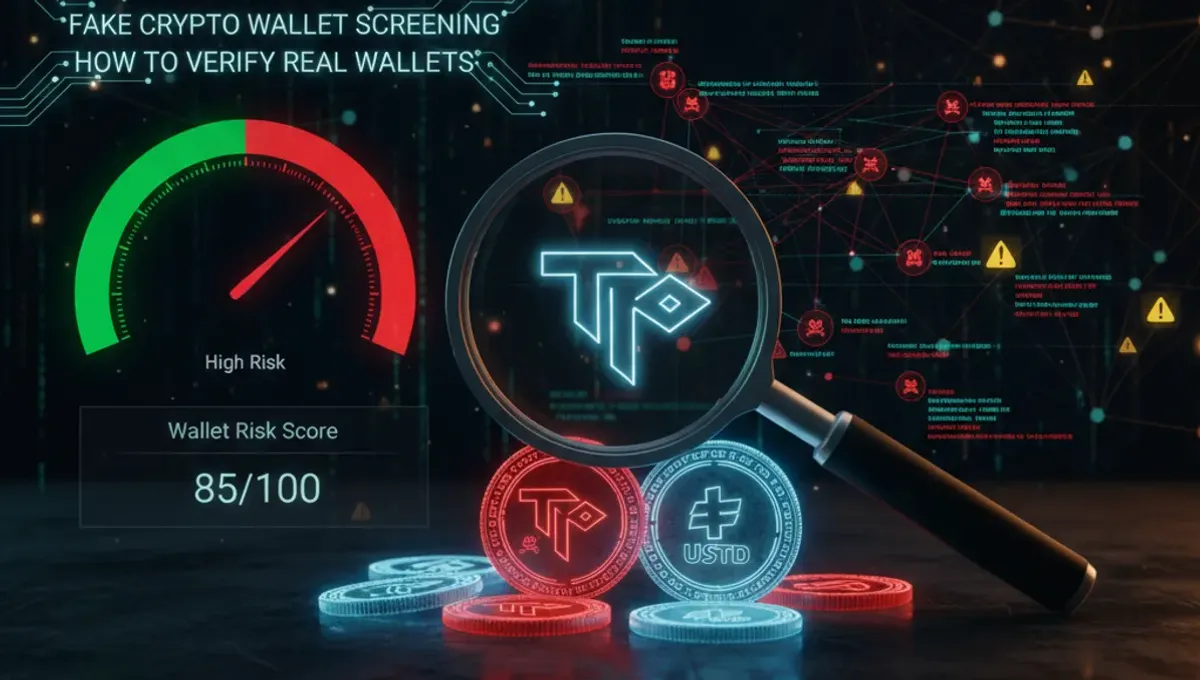
What Is a Fake Crypto Wallet and Why Screening Matters
A fake crypto wallet is a fraudulent address or application designed to deceive users into sending funds or revealing private keys. Scammers create lookalike wallet apps, phishing sites, and spoofed addresses that mimic legitimate services. Wallet screening is the process of verifying an address's legitimacy, transaction history, and compliance status before you interact with it. Real wallet screening checks whether an address has been linked to known scams, theft, sanctions lists, or darknet markets. This matters because once funds are sent to a fake or compromised wallet, recovery is nearly impossible. Exchanges and custodians freeze accounts tied to tainted coins, leaving you unable to withdraw or trade. Screening protects you from receiving stolen USDT, frozen TRC20 tokens, or Bitcoin flagged as proceeds of crime.
How to Identify Fake Crypto Wallets: Red Flags
Fake wallets share common warning signs. Look for:
- Newly created addresses with zero transaction history or sudden large inflows from unknown sources
- Wallet apps downloaded from unofficial app stores or third-party sites, not the official provider
- URLs that mimic legitimate wallets but have slight spelling differences (e.g., 'myetherwallet.io' vs. 'myetherwallet.com')
- Requests for seed phrases, private keys, or recovery codes—legitimate wallets never ask for these
- Addresses associated with known scam campaigns, pump-and-dump schemes, or phishing attacks
- Wallets linked to mixer services, darknet markets, or gambling platforms
- Addresses flagged on public blockchain explorers as receiving stolen funds or sanctions-related transfers
Before accepting a wallet address from anyone, verify it independently through a blockchain explorer and cross-check it against known fraud databases and sanctions lists.
How to Check Crypto Wallet Legitimacy: Step-by-Step
Follow these steps to verify a wallet address before sending funds:
- Copy the wallet address and paste it into a blockchain explorer (Etherscan for Ethereum, Tronscan for Tron, Blockchain.com for Bitcoin).
- Review the address's transaction history. Legitimate wallets show regular activity, known counterparties, and clear transaction patterns.
- Check the address's age. Newly created wallets with immediate large transfers are higher risk.
- Look for associated labels. Explorers often tag addresses linked to exchanges, scams, or known entities.
- Run an AML check crypto wallet scan through a compliance service to detect sanctions exposure, darknet connections, and tainted coin flags.
- Cross-reference the address against public blacklists and sanctions databases (OFAC, EU sanctions lists).
- If the wallet belongs to an exchange or service, verify the address on their official website or support page.
- Ask the sender for proof of ownership or verification through an independent channel.
Do not send funds until all checks pass. If any red flags appear, request an alternative address or decline the transaction.
AML Check Crypto Wallet: Understanding Risk Scores and Flags
An AML check crypto wallet scan assigns a risk score based on transaction patterns, source of funds, and compliance history. Risk scores typically range from low (0–20%) to high (80–100%), with thresholds varying by exchange and jurisdiction. A low-risk wallet shows clean transaction history, no sanctions exposure, and no links to theft or illegal activity. Medium-risk wallets may have received funds from mixers, gambling platforms, or unverified sources but show no direct sanctions or darknet connections. High-risk wallets are flagged for direct sanctions exposure, stolen funds, ransomware payments, or active darknet market involvement. When you receive USDT or TRC20 tokens from a high-risk address, exchanges may freeze your account pending investigation. Acceptable risk thresholds depend on your compliance requirements—retail users typically accept low to medium risk, while institutional buyers require low-risk wallets only. Always check the risk score before accepting large transfers.
Crypto Wallet Screening Tools: What to Use and How
Several services provide crypto wallet screening and AML checks. When choosing a tool, verify that it covers your target blockchain (Tron, Ethereum, Bitcoin, etc.) and provides clear risk scoring. Look for services that check against OFAC sanctions lists, darknet market databases, theft reports, and mixer detection. The best approach is to start with the curated list of verified AML services available on our AML Services page—these have been vetted for accuracy, coverage, and compliance standards. Most services allow you to screen a wallet by entering the address and receiving a detailed report within seconds. Reports typically include risk score, transaction history summary, associated entities, and specific flags (e.g., 'linked to Tornado Cash mixer' or 'received stolen funds'). Free screening tools often provide basic checks but may lack depth; paid services offer comprehensive sanctions screening, darknet detection, and ongoing monitoring. For critical transactions, use a service that provides audit trails and compliance documentation for regulatory purposes.
What to Do If You Receive Funds from a Flagged Wallet
If you receive USDT, TRC20, or Bitcoin from a wallet flagged as high-risk or tainted, take immediate action:
- Do not spend or transfer the funds. Exchanges monitor blockchain activity and may freeze your account if you move flagged coins.
- Run a full AML check on the incoming address to understand the specific risk (sanctions, theft, mixer, darknet).
- Document the transaction: timestamp, sender address, amount, and the reason you received it (payment, refund, etc.).
- Contact your exchange or custodian and disclose the incoming transfer. Explain the context and provide the AML report.
- If the funds are linked to theft or ransomware, report the transaction to law enforcement or your financial regulator.
- Do not attempt to 'clean' the coins through mixers or exchanges—this is illegal in most jurisdictions and will trigger compliance investigations.
- If the risk is low to medium and the source is legitimate (e.g., a business partner using a shared wallet), request that they use a cleaner address for future transfers.
Exchanges may hold flagged funds for 30–90 days while investigating. Cooperation and transparency reduce the risk of permanent account suspension.
Preventing Fake Wallet Scams: Best Practices
Protect yourself by adopting these habits:
- Always verify wallet addresses independently. Never copy-paste an address from an email, chat, or unverified source without confirming it through an official channel.
- Use hardware wallets for large holdings. Hardware wallets are not connected to the internet and cannot be compromised by fake apps or phishing sites.
- Enable multi-signature wallets for business accounts. Require multiple approvals before funds can be sent, reducing the risk of unauthorized transfers.
- Screen wallets before every transaction. Make AML checks and blockchain explorer reviews part of your standard process, not an afterthought.
- Educate yourself on common scams: fake exchange sites, impersonation of support staff, and social engineering attacks.
- Use official apps and websites only. Download wallets from official app stores and verify URLs before entering credentials.
- Keep recovery phrases and private keys offline and secure. Never share them, and never enter them into websites or apps.
- For business transactions, use established payment channels and verify counterparties through multiple sources.
Regular wallet screening and vigilance are your best defenses against fake wallets and tainted coins.
Frequently asked questions
How do I know if a crypto wallet address is fake?
Check the address on a blockchain explorer to verify transaction history and age. Look for red flags: newly created wallets, unusual transaction patterns, or labels linking it to scams. Run an AML check to detect sanctions exposure or darknet connections. Verify the address independently through official channels, not from emails or unverified sources. Legitimate wallets show consistent activity and clean compliance history.
What happens if I receive funds from a flagged wallet?
Exchanges may freeze your account if you receive tainted coins. Do not spend or transfer the funds. Run an AML check to understand the risk, document the transaction, and contact your exchange to disclose it. Cooperation and transparency reduce suspension risk. Do not attempt to clean the coins through mixers—this is illegal and triggers investigations.
Can I use a free AML check for crypto wallets?
Free tools provide basic screening but often lack depth in sanctions detection and darknet analysis. Paid services offer comprehensive checks, audit trails, and compliance documentation. For critical transactions, use verified AML services that cover your blockchain and provide detailed risk scoring. Free checks are useful for quick verification; paid services are essential for business compliance.
What risk score should I accept for receiving USDT or TRC20?
Retail users typically accept low to medium risk (0–50%). Institutional buyers require low-risk wallets only (0–20%). Risk thresholds depend on your compliance requirements and exchange policies. Always review the specific flags: medium-risk wallets from mixers may be acceptable, while sanctions-flagged wallets are never acceptable. Check your exchange's policy before accepting transfers.
How do I verify a wallet address before sending cryptocurrency?
Copy the address and check it on a blockchain explorer for transaction history and labels. Run an AML check to detect compliance risks. Cross-reference against sanctions lists and blacklists. Ask the recipient to confirm the address through an independent channel. Never send large amounts without screening. Use the verified AML services listed on our AML Services page for comprehensive checks.