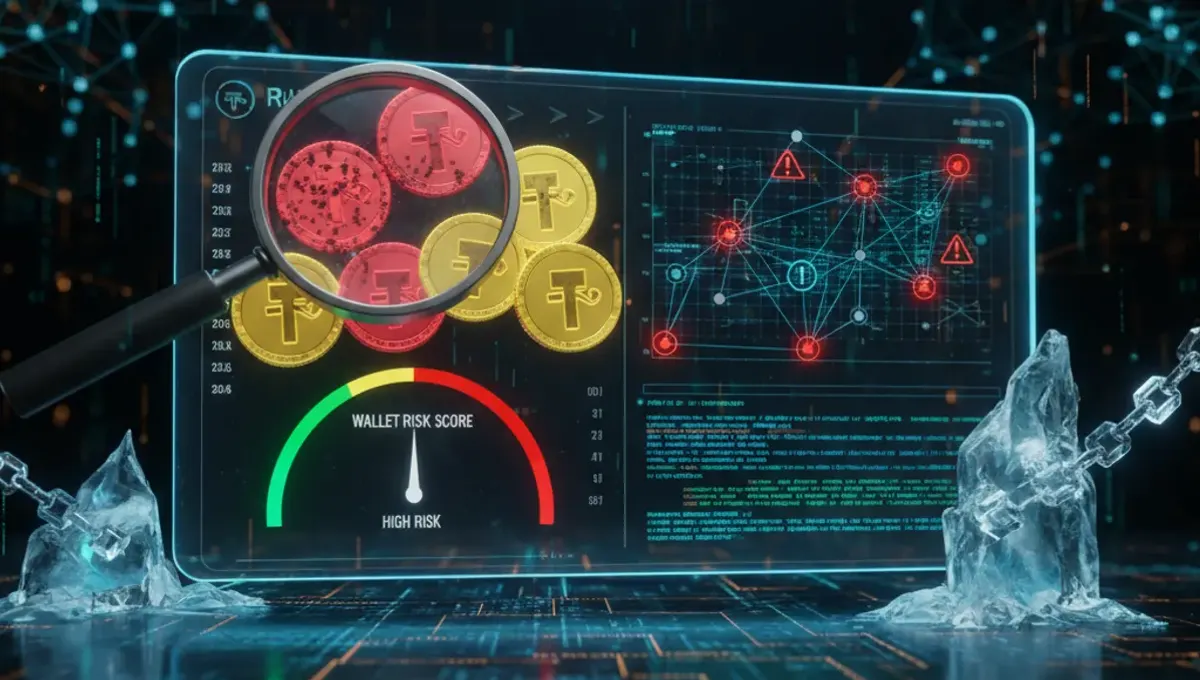
What Is an AML Check and Why It Matters
An AML (Anti-Money Laundering) check is a compliance scan that examines a cryptocurrency wallet's transaction history and associated addresses. It answers a simple question: has this wallet or its coins touched high-risk activity. For crypto businesses and individual traders, AML checks protect against receiving tainted coins—funds linked to theft, sanctions, darknet markets, or scams. Exchanges freeze accounts and seize deposits when they detect compliance violations. By screening wallets before accepting deposits, you avoid these freezes and the costly process of proving your funds are clean. AML checks combine on-chain data (transaction records on the blockchain) with off-chain intelligence (known darknet addresses, sanctioned entity lists, theft databases) to build a risk profile.
How AML Risk Scoring Works
AML risk scoring assigns a numerical or categorical rating to a wallet based on its transaction behavior and connections. The scoring process examines several factors: direct transactions with known high-risk addresses (mixers, gambling platforms, darknet markets), the age and activity level of the wallet, the number of hops between the wallet and flagged entities, and whether the wallet has received stolen or sanctioned funds. Risk scores typically range from low (clean, minimal exposure) to high (direct mixer use, darknet links, or sanctioned entity transfers). A low risk score means the wallet has a clear transaction history with no suspicious patterns. A medium score suggests some exposure to risky activity but not direct involvement. A high score indicates direct or recent contact with known illicit sources. Different compliance services use different thresholds, but most flag scores above a certain level as unsuitable for regulated exchanges.
Step-by-Step: How to Do AML Checks on a Crypto Address
To perform an AML check on a wallet address, follow these steps:
- Collect the wallet address you want to screen (TRX, USDT TRC20, BTC, ETH, or other blockchain address).
- Visit a verified AML check service—our curated list of trusted AML services on this site includes options for different blockchains and compliance needs.
- Enter the address into the screening tool.
- Review the risk score and detailed report, which typically shows transaction history, connected addresses, and flagged activity.
- Check the risk category: does the wallet have mixer exposure, darknet links, sanctions flags, or theft indicators.
- Decide whether the risk level is acceptable for your use case (most exchanges require low to very low scores for deposits).
- If the score is high, do not accept the deposit or investigate further before proceeding.
The entire process takes seconds to minutes depending on wallet age and transaction volume.
What Risk Score Levels Mean and Acceptable Thresholds
Risk score levels vary by service, but most use a 0–100 scale or low/medium/high categories. A score of 0–20 (very low risk) indicates a clean wallet with no suspicious connections—safe for most regulated exchanges. A score of 21–50 (low to medium risk) suggests minor exposure to risky activity, such as a single transaction with a gambling platform years ago; many exchanges accept this range. A score of 51–80 (medium to high risk) shows direct or recent contact with mixers, darknet markets, or other flagged sources; most exchanges reject these wallets. A score of 81–100 (very high risk) indicates active involvement in illicit activity or direct sanctions exposure; all regulated platforms block these addresses. Acceptable thresholds depend on your compliance policy. Exchanges typically require scores below 30–40 for deposits. If you receive a medium or high score, you can request a detailed report to understand the specific risk factor and decide whether to proceed.
How to Check a Wallet Before Receiving USDT or TRX
Before accepting a deposit of USDT (TRC20), TRX, BTC, or ETH, screen the sender's address using an AML check service. Request the sender's wallet address, run it through a wallet screening tool, and review the risk score within minutes. If the score is low, proceed with the deposit. If it is medium or high, ask the sender for clarification or decline the transfer. This simple step prevents your exchange account from being flagged or frozen due to tainted coins. For businesses, integrate AML checks into your deposit workflow: require customers to provide wallet addresses, screen them automatically, and only accept transfers from low-risk wallets. For individual traders, make it a habit to check any large incoming transfer before confirming receipt. The cost of an AML check (typically a small fee per scan or a subscription model) is far less than the cost of a frozen account or compliance investigation.
AML Check Costs and Fee Models
AML check pricing varies by service and usage volume. Some services charge a per-check fee, typically ranging from a few cents to a few dollars per wallet scan, depending on the blockchain and report depth. Others offer subscription models with monthly fees and unlimited checks, suitable for businesses processing many deposits. Free AML check options exist but usually provide limited data—basic risk flags without detailed transaction history or full risk scoring. Paid services deliver comprehensive reports including transaction graphs, connected addresses, and specific risk categories (mixer exposure, darknet links, sanctions flags). For occasional users, per-check fees are cost-effective. For exchanges or high-volume traders, subscriptions reduce the per-check cost. When evaluating AML check fees, consider the report quality and coverage: does it screen all blockchains you use (TRX, USDT, BTC, ETH), does it include sanctions screening and theft databases, and does it provide actionable risk details. Our AML Services page lists verified providers with transparent pricing to help you compare options.
What Happens When Coins Are Flagged as Dirty
If an AML check flags your coins as dirty (high risk score or direct illicit connection), several outcomes are possible. If you try to deposit flagged coins to a regulated exchange, the exchange's compliance system will detect the high risk score and either reject the deposit or freeze your account pending investigation. If your account is frozen, you must provide proof that you acquired the coins legitimately—receipts, transaction records, or explanations of the flagged activity. This process can take weeks and may result in permanent account closure if the exchange cannot verify your claim. If you receive flagged coins unknowingly, contact the sender immediately to understand the source. If the coins came from a theft or scam, you cannot recover them through the blockchain (transactions are irreversible), but you can report the incident to law enforcement and your exchange. To avoid this situation, always screen wallets before accepting large transfers and maintain clear records of your coin sources.
Frequently asked questions
How long does an AML check take?
Most AML checks complete in seconds to a few minutes. The tool scans the wallet address against known risk databases and generates a risk score instantly. Detailed reports with transaction history may take slightly longer but are usually ready within minutes. Real-time screening is standard for compliance platforms.
Can I get my frozen USDT back if it was flagged by an AML check?
If your USDT is frozen due to an AML flag, you must contact your exchange's compliance team with proof of legitimate acquisition. Provide transaction records, receipts, or explanations of the flagged activity. Recovery depends on the exchange's investigation and your ability to verify the source. Blockchain transactions are irreversible, so prevention through pre-deposit screening is essential.
What is the difference between AML checks and KYT?
AML checks screen wallet addresses for risk indicators and compliance violations. KYT (Know Your Transaction) monitors ongoing transaction activity in real-time to detect suspicious patterns. AML checks are point-in-time snapshots; KYT is continuous monitoring. Both are used together in comprehensive compliance programs.
Do free AML checks provide the same information as paid services?
Free AML checks often provide basic risk flags but lack detailed transaction history, full risk scoring, and comprehensive database coverage. Paid services deliver in-depth reports with specific risk categories, sanctions screening, and theft databases. For serious compliance needs, paid services are more reliable.
What does a low AML risk score mean for my wallet?
A low AML risk score (typically 0–20 or 'very low risk') means your wallet has a clean transaction history with no suspicious connections to mixers, darknet markets, sanctions, or theft. Low-score wallets are accepted by regulated exchanges and pose minimal compliance risk.