What Is a Tron Address and Why Check It
A Tron address is a unique identifier on the Tron blockchain, typically starting with a 'T' and containing 34 alphanumeric characters. It functions like a bank account number—it receives and sends TRX tokens and TRC20 assets such as USDT. Checking a Tron address meaning involves understanding that each address has a complete transaction history visible on the blockchain. You should check a Tron wallet address before accepting deposits because funds linked to mixers, darknet markets, scams, or sanctioned entities can be flagged as tainted. Exchanges and custodians freeze accounts holding such coins, leaving you unable to withdraw or trade. A Tron address checker screens the wallet's history against AML databases, sanctions lists, and known illicit sources to assess risk before the transaction settles.
How Tron Address Checkers Work: AML Screening Explained
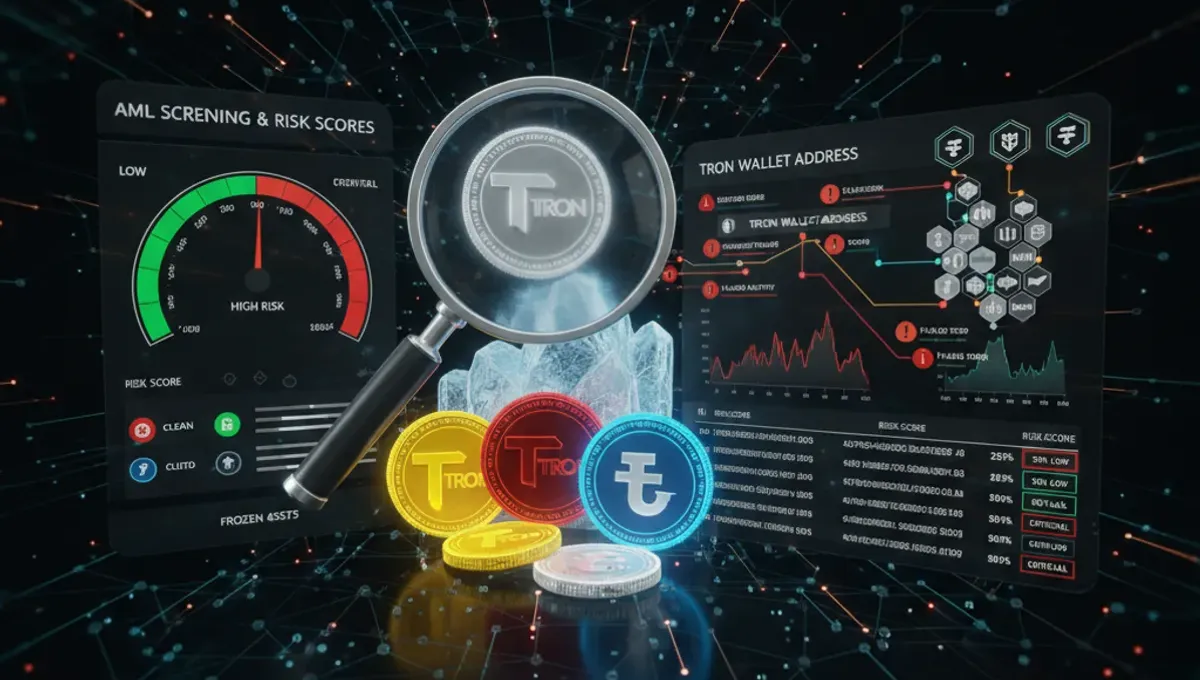
A Tron address checker performs wallet screening by cross-referencing the address against multiple data sources: transaction history on the Tron blockchain, known darknet market wallets, mixer services, stolen fund databases, and sanctions lists maintained by regulatory bodies. The tool traces incoming and outgoing transactions to identify patterns typical of illicit activity. It assigns a risk score—usually on a scale from 0 (clean) to 100 (high risk)—based on the number and severity of red flags. Risk categories include direct exposure to mixers, gambling platforms, scams, stolen funds, and sanctioned entities. The checker also flags whether the address has received USDT or other TRC20 tokens from flagged sources. This process is called Know Your Transaction (KYT) screening. Most checkers update their databases regularly to reflect newly identified illicit wallets and sanctions designations.
Step-by-Step: How to Check a Tron Address
Follow these steps to check a Tron wallet address before accepting funds:
- Copy the Tron address you want to verify (starts with 'T', 34 characters).
- Visit a trusted AML service from our curated list of verified AML services on this site—these tools are designed specifically for wallet screening.
- Paste the address into the checker's search field.
- Select 'Tron' or 'TRX' as the blockchain network.
- Click 'Check' or 'Scan' and wait for the analysis to complete (typically 10–30 seconds).
- Review the risk score and detailed report showing any flagged transactions, linked illicit sources, and sanctions exposure.
- If the score is below your acceptable threshold (typically 20–30 for low-risk operations), the address is safe to receive from.
- If the score is high, reject the transaction or investigate further before proceeding.
Some checkers also allow you to check a Tron address lookup by transaction hash or token contract address for deeper investigation.
Understanding Tron Address Risk Scores and Thresholds
Risk scores quantify the likelihood that a Tron address is associated with illicit activity. Here's how to interpret them:
- 0–20: Low risk. Address shows no known illicit exposure. Safe to receive funds from.
- 21–50: Medium risk. Address may have minor exposure to mixers or unverified sources. Use caution; investigate further if possible.
- 51–100: High risk. Address is linked to darknet markets, stolen funds, sanctions lists, or active scams. Do not accept funds; report to compliance if required.
Acceptable thresholds depend on your operation. Exchanges and custodians typically reject any address scoring above 30. Retail users may tolerate scores up to 50 if the source is known and trusted. Regulated entities must maintain stricter policies aligned with their AML compliance obligations. A Tron address checker provides a detailed breakdown of which risk categories triggered the score, allowing you to make an informed decision. If you receive USDT or other TRC20 tokens from a high-risk address, your exchange account may be frozen pending investigation.
What to Do If Your Tron Address Is Flagged as High Risk
If a Tron address check reveals a high risk score, take these steps:
- Do not accept the transaction if you have not yet received the funds.
- If you have already received tainted coins, document the transaction details and notify your exchange or custodian immediately.
- Request a detailed AML report from the checker to understand which specific risk factors triggered the flag (mixer exposure, sanctions link, etc.).
- If the flag is a false positive (e.g., the address was previously compromised but is now under your control), contact the AML service provider to request a review and potential delisting.
- Segregate the flagged funds in a separate wallet if possible to prevent them from contaminating other holdings.
- Consult your compliance officer or legal advisor if you are a regulated entity.
- Avoid sending flagged coins to exchanges, as they will likely freeze your account and may report the activity to authorities.
Tainted coins can remain flagged indefinitely, even if you later gain legitimate control of the wallet. Prevention is far more effective than remediation.
Choosing a Trusted Tron Address Checker
Not all Tron address checkers are equally reliable. When selecting a tool, verify that it:
- Covers Tron (TRX) and TRC20 tokens explicitly, including USDT on Tron.
- Updates its sanctions and illicit wallet databases regularly (at least weekly).
- Provides detailed reports showing which risk categories triggered the score, not just a number.
- Offers both free and premium tiers; free checks are useful for occasional verification, while premium subscriptions suit ongoing compliance needs.
- Has transparent methodology and does not invent false positives.
- Integrates with major exchanges and custodians (a sign of industry trust).
Our curated list of verified AML services on this site includes tools specifically tested for Tron address checking. Starting with a trusted service from that list is the safest approach, as each provider has been vetted for accuracy and reliability. Avoid generic blockchain explorers that lack AML-specific screening; they show transaction history but not risk assessment.
Best Practices: Avoiding Tainted Coins Before They Arrive
Prevention is simpler than remediation. Use these practices to avoid receiving flagged Tron addresses:
- Always check a Tron address before accepting a transfer, especially for large amounts or from unfamiliar sources.
- Request the sender's address in advance and verify it through an AML checker before confirming the transaction.
- Use whitelisting: maintain a list of known-safe addresses and reject transfers from any address not on the list.
- For USDT on Tron (TRC20), verify the sender's address even if you trust the person—their wallet may have been compromised.
- If you operate an exchange or custodian, implement mandatory AML screening for all incoming deposits above a threshold (e.g., $1,000 equivalent).
- Educate users about the risks of receiving funds from unknown sources; many account freezes result from users unknowingly accepting tainted coins.
- Monitor your own address regularly using a Tron address checker to ensure it has not been flagged due to a transaction you did not initiate.
Regular wallet screening is a low-cost, high-impact compliance control.
Frequently asked questions
What does a Tron address checker do?
A Tron address checker scans a wallet's transaction history against AML databases, sanctions lists, and known illicit sources to assign a risk score. It identifies exposure to mixers, darknet markets, stolen funds, and sanctioned entities. The tool helps you determine whether it is safe to receive funds from that address before the transaction settles.
Is checking a Tron address free?
Many Tron address checkers offer free basic scans with limited detail. Premium subscriptions provide detailed reports, historical data, and bulk checking capabilities. Free checks are sufficient for occasional verification; businesses requiring ongoing compliance should use a paid service from our curated list of verified AML services.
What risk score should I accept for a Tron address?
Low-risk thresholds are typically 0–20. Scores of 21–50 warrant caution and further investigation. Scores above 50 indicate high risk and should be rejected. Regulated entities and exchanges enforce stricter limits, often rejecting any address above 30. Your acceptable threshold depends on your compliance obligations and risk tolerance.
Can I remove a high-risk flag from my Tron address?
If the flag is a false positive, contact the AML service provider to request a review and potential delisting. Provide evidence that you now control the address legitimately. However, if the address was genuinely used for illicit activity, the flag may persist indefinitely. Prevention through careful verification is more effective than remediation.
What happens if I receive USDT from a flagged Tron address?
Exchanges and custodians may freeze your account if you deposit USDT or other TRC20 tokens from a high-risk address. They will investigate the source and may require you to prove the funds are legitimate. In regulated jurisdictions, you may face compliance violations. Always check the sender's address before accepting the transfer.