What Is a Tron Address and Why Check It?
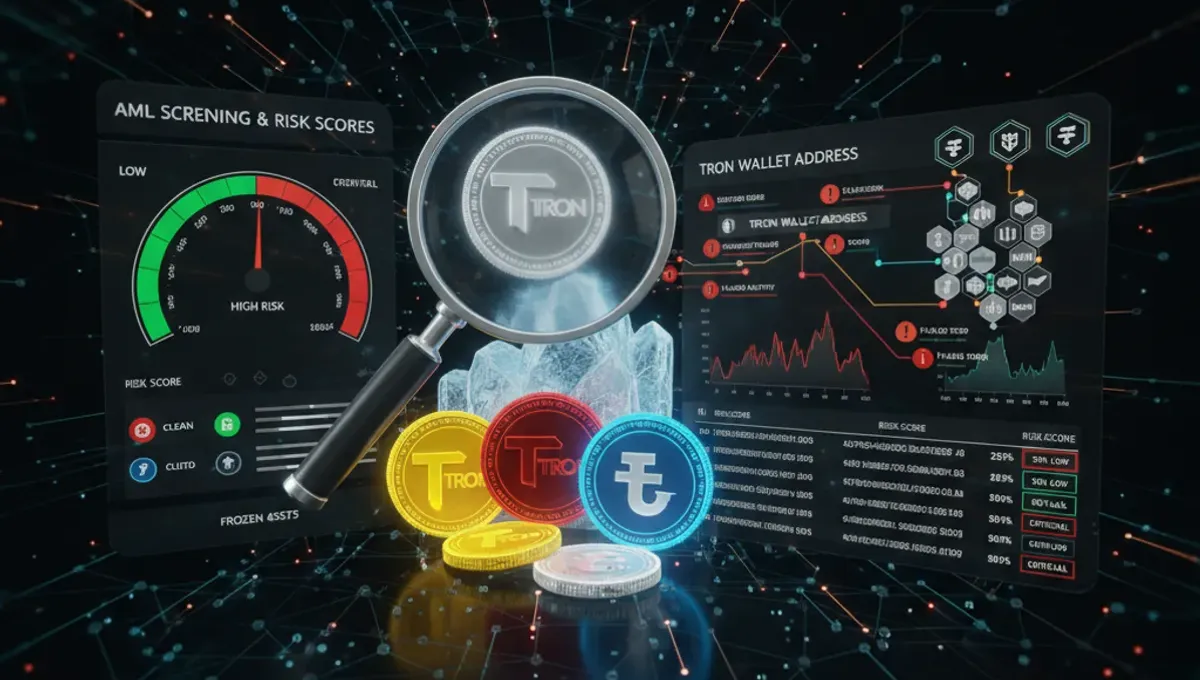
A Tron address is a unique identifier on the Tron blockchain, formatted as a 34-character string starting with 'T'. Each address holds TRX tokens and TRC20 assets like USDT. A tron address check reveals whether that wallet has been flagged for illicit activity, sanctions violations, or other compliance risks. Exchanges and custodians freeze deposits from flagged addresses to comply with AML (anti-money laundering) regulations. By checking a Tron address before you receive funds, you can reject high-risk transfers and protect your account from being frozen or banned. Risk scoring on Tron addresses works similarly to other blockchains: the system cross-references the address against sanctions lists, known darknet wallets, mixer services, and theft databases. A clean address typically has no history of illicit use; a flagged address may have received stolen funds, been used in scams, or interacted with sanctioned entities.
How to Check a Tron Address: Step-by-Step
To perform a tron address lookup and assess risk, follow these steps:
- Obtain the Tron address you want to screen. Copy the full 34-character address (starting with 'T') from the wallet or transaction.
- Visit a reputable AML screening service. Our curated list of verified AML services on this site includes tools that support Tron address screening. Choose one that offers KYT (Know Your Transaction) or wallet screening for Tron.
- Paste the address into the checker tool. Most services have a search box where you enter the address.
- Review the risk score and flags. The tool will return a score (often 0–100 or low/medium/high) and list any detected risks: sanctions exposure, mixer interaction, darknet links, or stolen fund history.
- Decide whether to proceed. If the score is low and no major flags appear, the address is generally safe. If the score is high or multiple risks are flagged, reject the transaction or investigate further.
- Document the check for compliance records. Keep a record of when you checked the address and what the result was, especially for business transactions.
Understanding Tron Address Risk Scores
A risk score quantifies the likelihood that a Tron address has been involved in illicit activity. Scores typically range from 0 (clean) to 100 (high risk), though some services use categorical labels like low, medium, and high.
Low risk (0–20): The address has no known associations with sanctions, darknet markets, theft, or mixers. It is generally safe to receive funds from this address.
Medium risk (21–60): The address may have interacted with services or entities that carry some compliance concern, such as gambling platforms or privacy-focused services. Review the specific flags before deciding.
High risk (61–100): The address shows clear signs of illicit use: direct sanctions exposure, confirmed mixer interaction, darknet marketplace links, or stolen fund history. Most exchanges will freeze deposits from high-risk addresses.
Acceptable thresholds depend on your compliance policy. Retail users often accept low-risk addresses. Businesses and exchanges typically reject medium and high-risk addresses to avoid regulatory penalties. If you receive a flagged transfer, contact your exchange or custodian to understand the specific risk before depositing.
What Risk Factors Trigger a Tron Address Flag?
Several activities cause a Tron address to be flagged during a tron address check:
Sanctions exposure: The address has sent or received funds from entities on government sanctions lists (OFAC, EU, UN, etc.).
Mixer and tumbler use: The wallet has interacted with privacy mixers or coin tumblers designed to obscure transaction trails.
Darknet marketplace activity: The address has received funds from or sent funds to known darknet markets or illegal marketplaces.
Scam and theft history: The address is associated with Ponzi schemes, rug pulls, or confirmed stolen funds.
Gambling and high-risk services: Some compliance policies flag addresses linked to unregulated gambling or high-risk financial services.
Unauthorized exchange or wallet: The address belongs to a platform or service that operates without proper licensing.
Not all flags mean the address is definitively illicit. Some legitimate users interact with privacy services for non-criminal reasons. However, exchanges and regulated custodians typically apply a conservative approach: any flag may trigger a freeze or rejection. If your address is flagged, you can contact the screening service or your exchange to understand the specific reason and dispute it if warranted.
How to Avoid Receiving Tainted Coins on Tron
Tainted coins are tokens that have been flagged as stolen, sanctioned, or otherwise illicit. Receiving them can result in your exchange account being frozen, your funds being seized, or your account being permanently banned.
Best practices to avoid tainted USDT TRC20 and TRX:
- Check the sender's Tron address before accepting a large transfer. Use a tron address checker to verify the sender is not high-risk.
- Request proof of funds origin. Ask the sender where the funds came from and verify the story matches the address history.
- Use trusted counterparties. Conduct business with established exchanges, custodians, and known individuals or companies.
- Monitor your deposits. After receiving funds, check your wallet address against AML services periodically to ensure no new flags appear.
- Maintain records. Document all incoming transfers, the sender's address, and the date. This helps you prove good faith if a deposit is later flagged.
- Set a risk threshold. Decide in advance what risk score you will accept. Reject any transfer from an address that exceeds your threshold.
- Use exchange screening. Many exchanges screen deposits automatically. Understand your exchange's policy and ask about their AML procedures.
If you do receive tainted coins, do not transfer them further. Contact your exchange immediately to report the deposit and ask for guidance. Attempting to move flagged funds may trigger additional compliance holds.
Comparing Tron Address Checkers and AML Services
Several types of tools can check a Tron address. Block explorers like Tronscan show transaction history and balances but do not provide AML risk scoring. Dedicated AML and KYT (Know Your Transaction) services analyze addresses against sanctions lists, theft databases, and behavioral patterns to assign risk scores.
When choosing a tron address lookup tool, consider:
Coverage: Does it screen Tron addresses specifically, or only Bitcoin and Ethereum?
Data sources: Does it use official sanctions lists (OFAC, EU, UN) and reputable blockchain analytics firms?
Risk scoring methodology: How does it assign scores? Is the methodology transparent?
Speed: Can it return results in seconds, or does it require manual review?
Cost: Is there a free tier, or is screening pay-per-use?
API access: If you need to screen many addresses, does the service offer an API for integration?
Our curated list of verified AML services on this site includes tools that meet these criteria and support Tron screening. Starting with a trusted service from that list is the safest way to begin checking Tron addresses, as these services have been vetted for accuracy and compliance.
What Happens If Your Tron Address Is Flagged?
If your Tron address is flagged as high-risk, several outcomes are possible:
Exchange deposit rejection: Your exchange may refuse to credit a deposit from that address or freeze the funds pending review.
Account suspension: The exchange may temporarily or permanently suspend your account to investigate the source of funds.
Funds seizure: In extreme cases, if the funds are confirmed as stolen or sanctioned, the exchange may seize them and report the incident to authorities.
Compliance hold: Your exchange may place a hold on your account while they verify the legitimacy of the transfer.
What to do if flagged:
- Contact your exchange or custodian immediately. Explain the source of the funds and provide documentation (invoices, contracts, payment receipts).
- Request a manual review. Explain why the flag may be incorrect or provide context for any legitimate activity that triggered the flag.
- Provide proof of funds origin. Submit evidence that the funds came from a legitimate source, such as a salary deposit, business transaction, or personal savings transfer.
- Be patient. Manual reviews can take days or weeks. Do not attempt to move the funds or open additional accounts to circumvent the hold.
- Consider disputing the flag with the AML service. Some screening services allow you to dispute inaccurate flags if you provide supporting documentation.
If the flag is accurate and the funds are confirmed as illicit, cooperate with your exchange and any law enforcement inquiries. Attempting to hide or move flagged funds can result in criminal charges.
Frequently asked questions
What does a tron address check tell me?
A Tron address check reveals whether a wallet has been flagged for sanctions exposure, darknet activity, mixer use, theft, or scams. It assigns a risk score to help you decide whether to accept funds from that address. A clean address typically has no illicit history; a flagged address may trigger exchange freezes or account bans.
How do I know if a tron address is safe?
Use a tron address checker to scan the wallet against AML databases. A low risk score (0–20) and no major flags indicate the address is generally safe. If the score is medium or high, or if specific risks like sanctions or mixer use are flagged, reject the transaction or investigate further before accepting funds.
Can I check a tron address for free?
Some AML services offer free tron address checks with limited queries per day or basic risk scoring. For frequent or detailed screening, most services charge per check or offer subscription plans. Our verified AML services list includes options with free tiers. Compare features and pricing to find the best fit for your needs.
What is a tron address meaning and format?
A Tron address is a unique identifier on the Tron blockchain, formatted as a 34-character alphanumeric string starting with the letter 'T'. It represents a wallet that holds TRX tokens and TRC20 assets like USDT. Each address is derived from a private key and serves as the public destination for receiving funds on the Tron network.
What should I do if I receive funds from a flagged tron address?
Do not transfer the funds further. Contact your exchange or custodian immediately to report the deposit and ask for guidance. Provide documentation of the funds' origin if possible. Attempting to move flagged funds may trigger additional compliance holds or account suspension. Cooperate with any manual review or investigation.